ServicesChlorine & Chloramine Removal
Chlorine & Chloramine Removal in Lakeland
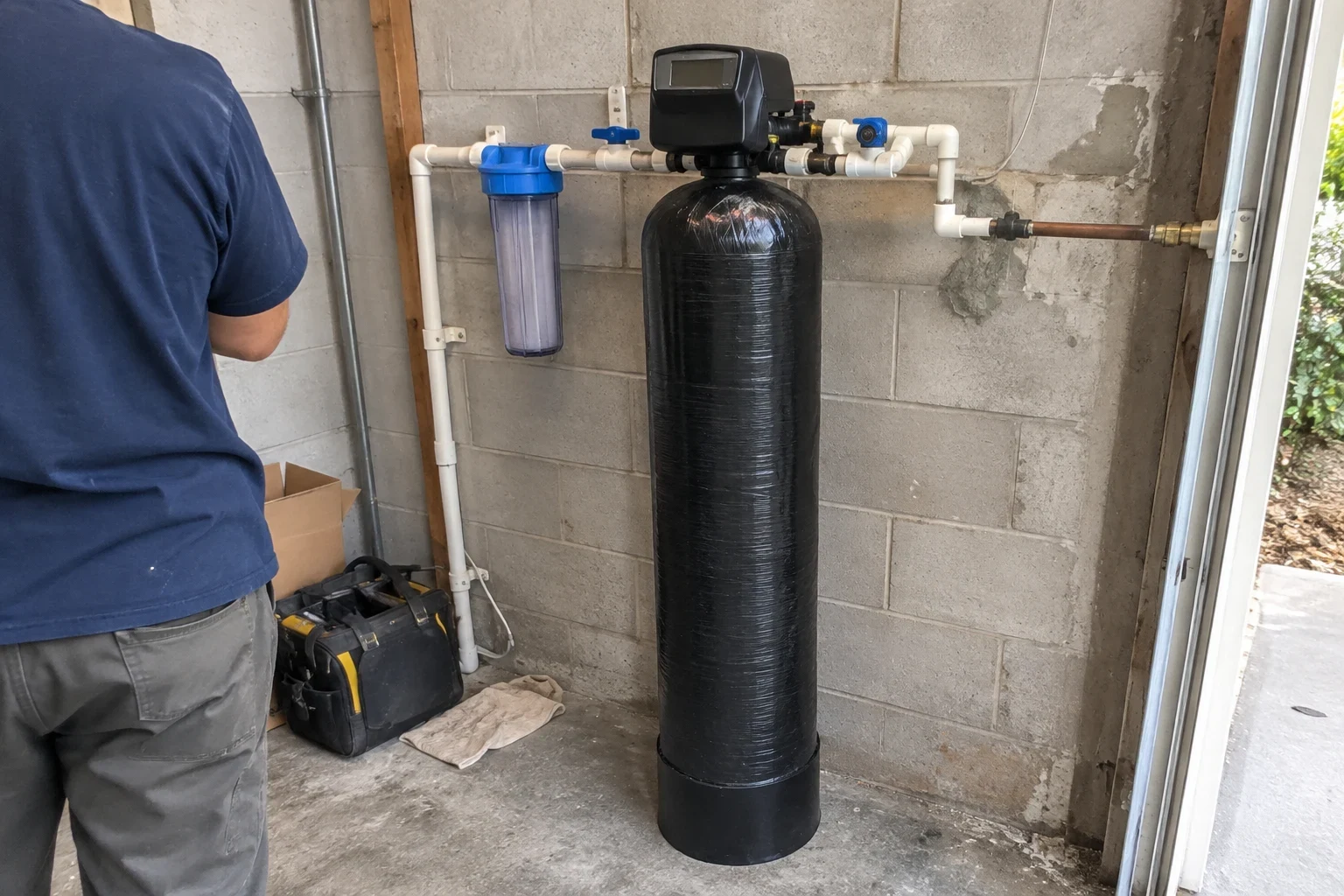
The disinfectant in city water keeps it safe on the way to you, but it can leave a bleach note in a hot shower and dull the taste of coffee and tea. We install carbon systems on your main line so every tap in your home runs without it.
What This Service Does for Your Water
A disinfectant goes into city water to keep it clean through miles of underground mains. Utilities choose between two kinds. Plain chlorine breaks down fairly quickly. Chloramine, made by combining chlorine with ammonia, stays active much longer and resists removal. Once the water arrives at your home, the disinfectant has done its work, and what you are left with is the smell, the taste and that dry, tight skin after you step out of the shower.
Plain chlorine is the simpler case, since standard activated carbon captures it with little effort. Chloramine needs catalytic carbon and a longer stay inside the media, so the tank is often larger. We choose the system based on which disinfectant reaches you and how much water your household draws at its busiest, so the water comes out clean tasting and the pressure feels unchanged.
Plenty of houses in Lakeland carry decades of plumbing fixes. We lay out the installation around what we find, whether that is an abandoned filter housing, a run where copper meets galvanized or PVC, or a main shutoff that will not fully seal.
What Your Installation Includes
- Media matched to your disinfectant
- Standard carbon for chlorine, catalytic carbon for chloramine. We confirm which one your utility uses before choosing media.
- A tank sized for contact time
- Carbon only does its work when water spends enough time passing through it. We size the tank to your peak flow, so a shower and a running dishwasher together still get fully treated water.
- Sediment prefilter where it helps
- Older service lines can shed rust and grit. A prefilter catches it before it reaches the carbon bed and shortens its life.
- Bypass valve and sound shutoffs
- Each install includes a bypass valve, which lets water keep flowing to the house while media or a cartridge is being changed. If your main shutoff is seized or weeping, we show you and can replace it while the line is already open.
- Careful work inside your home
- We lay down floor protection, keep cut pipe and packaging contained, and leave the area as tidy as we found it.
Signs Chlorine Removal Is Worth It
A pool smell at the tap
If you notice a bleach odor from the kitchen faucet or in a hot shower, the disinfectant is reaching you at full strength.
Dry skin and brittle hair
Many people find showers in carbon-filtered water feel noticeably softer on skin and hair, even though the mineral content has not changed.
Coffee, tea and ice taste off
Chlorine flattens delicate flavors. Filtered water lets them come through.
Worn rubber parts in older fixtures
Chloramine is known to be harder on some rubber seals, toilet flappers and washers. In a home with original fixtures, frequent drips and running toilets can be a clue.
An aquarium or a pond
Chloramine is harmful to fish and does not gas off when water sits. Filtered water makes top-offs simpler.
From First Call to Clean Water
- 1
We start on the phone
You tell us where your water comes from, how many people live in your home and what you would most like to change. A copy of your utility's yearly water quality report is useful here, since it shows whether chlorine or chloramine is in your water.
- 2
We inspect the main line
We locate the point where water enters your home, note the pipe material and its condition, and look for earlier repairs or leftover equipment that will shape the layout. Then we explain our recommendation and the reasons behind it in plain terms.
- 3
The installation
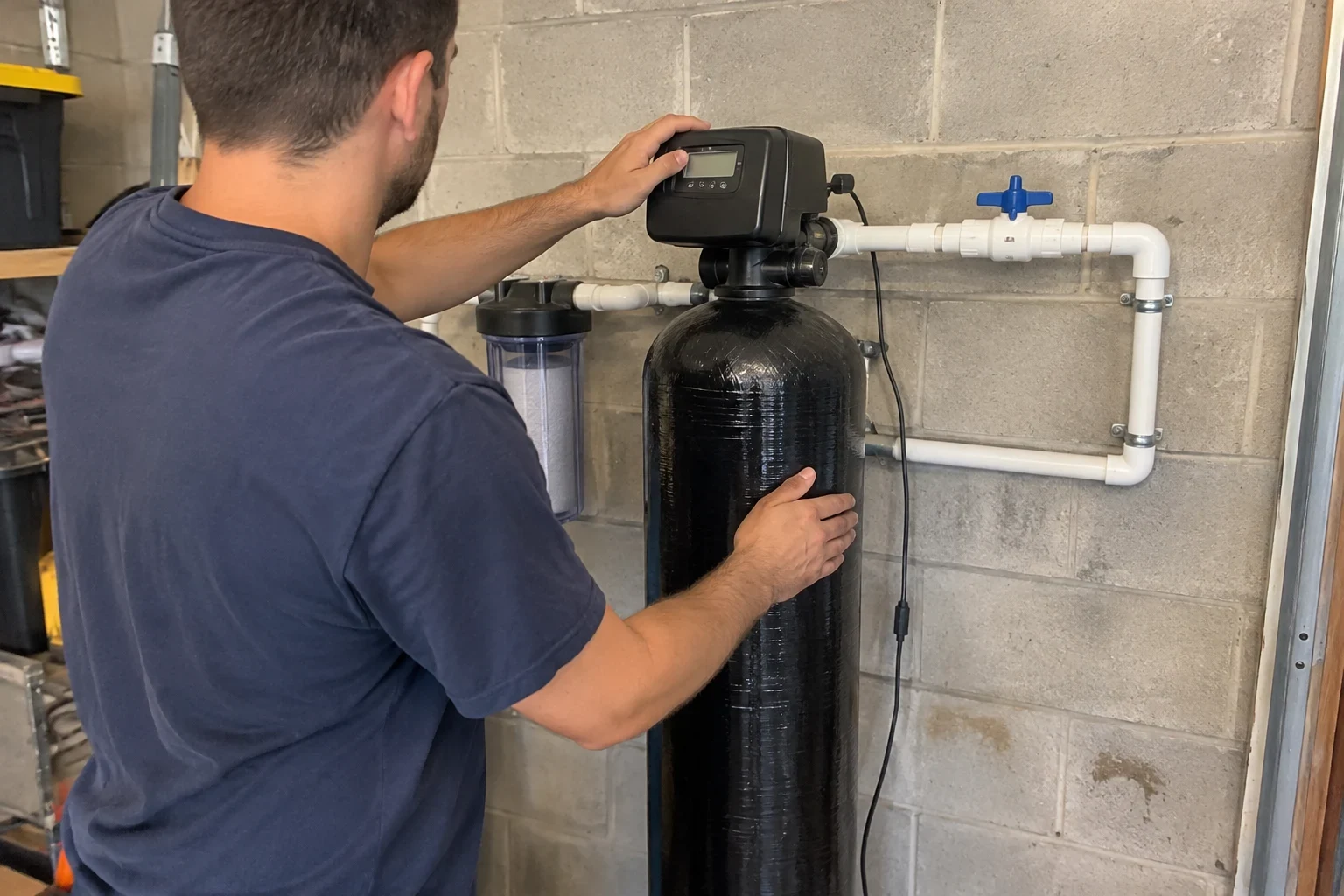
With the water off, we cut the system into the line with a bypass loop and set the tank on a firm, level base. Much of the time goes into the fittings, with extra care at every joint where new pipe meets old.
- 4
Flushing and walkthrough
New carbon releases fine black dust at first, so we flush the bed until the water runs clear. Before we go, we show you the valves and shutoffs and explain the upkeep the system will need.
What Moves the Cost
We give you a written, line-item price before any work starts. The total depends mostly on the disinfectant in your water and on the condition of the plumbing we are connecting to.
- Chlorine or chloramine
- Catalytic carbon costs more than standard carbon, and chloramine usually calls for a larger tank to get enough contact time.
- Household flow
- More bathrooms and more people using water at once mean a larger system to keep pressure steady.
- Condition of the main line
- Corroded galvanized pipe, a seized shutoff or a leftover housing from an earlier filter can add parts and labor. We show you what we find before adding anything.
- Where the system goes
- A garage wall with open access is simplest. Exterior installs may need a cover to keep sun off the tank, and tight spaces take longer.
Questions About Chlorine and Chloramine Removal
Something not covered here? (863) 593-7401
How do I know if my water has chlorine or chloramine?
Every water utility puts out a yearly water quality report, and the disinfectant it uses is listed there. Its customer service line can also tell you. If you would rather not dig for it, give us your address and provider when you call and we will work it out with you. That one detail decides which carbon media we put in the tank.
Will a carbon system reduce my water pressure?
A properly sized system should leave your pressure feeling the same as before. Pressure loss usually traces back to undersizing, where the tank cannot keep up with demand, or to a prefilter that has clogged because it was not changed on time. We size the tank around the moments your household uses the most water, then keep you on a regular upkeep schedule so the prefilter never gets that far.
Does this soften my water too?
No. Carbon removes the disinfectant and cleans up taste and odor, but it does nothing to calcium and magnesium. If white scale on faucets and glass shower doors is also a concern, water softeners are a separate conversation we are glad to have.
Is a whole-home system better than a filter at the kitchen sink?
A filter under the sink treats only that faucet. Your showers, washing machine and bathroom taps still get water with the disinfectant in it. Treating the main line covers every outlet in your home at once. Some families add reverse osmosis at the kitchen as well, for drinking and cooking.
What maintenance does it need?
Carbon is used up slowly over time, and how fast depends on your household's water use and the size of the tank. Prefilter cartridges need changing more often than the carbon does. We offer ongoing customer support for maintenance, filter replacements, and service needs, so you know what is coming due and when.
Ready for Water That Smells Like Nothing
Tell us about your home and your water, and we will explain which carbon system fits and what the install involves. We work in Lakeland and nearby towns including Winter Haven and Plant City.