ServicesSystem Replacement
Water Softener & Filtration System Replacement in Lakeland
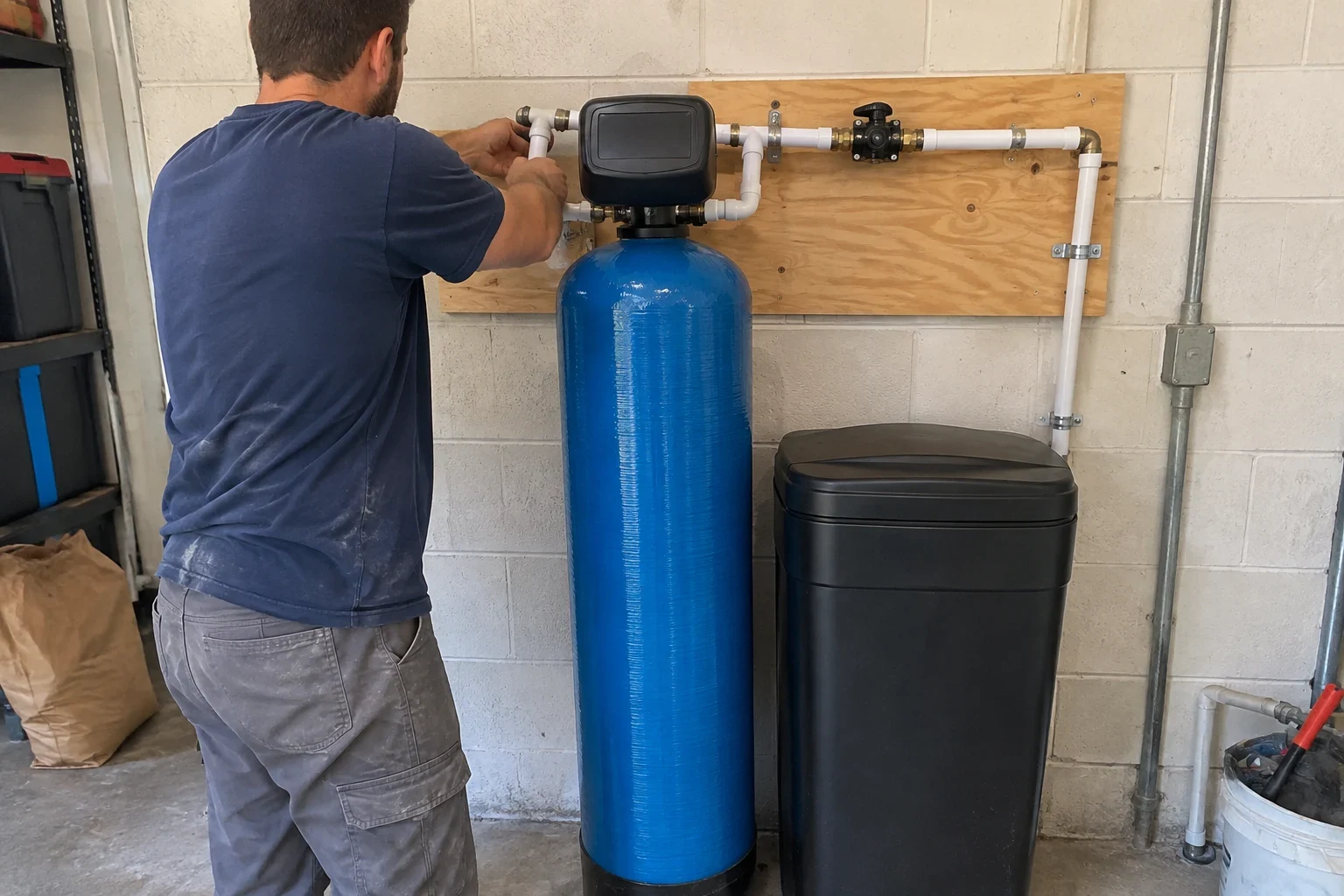
When an aging softener or filter system stops keeping up, we take it out cleanly, look closely at the plumbing it was connected to and install a new unit sized for your home. You get treated water again and connections you no longer have to worry about.
When a new system is the better choice
Some problems are worth a repair. A worn seal, a stuck valve or a clogged injector can often be fixed, and our water softener repair and maintenance service handles exactly that. Other systems have simply reached the end. The resin is spent, the control head is obsolete and parts are hard to find, or the tank has cracked. Putting more money into those units rarely pays off.
Replacement is also the moment to deal with what sits behind the old equipment. In older houses we often find a softener plumbed in years ago with mismatched fittings, a homemade bypass, or a drain line pushed into a standpipe with no air gap. We correct those details as part of the job, so the new system starts on a sound footing instead of inheriting someone else's shortcuts.
We will tell you plainly whether we think your current unit should be repaired or replaced, and why.
What a replacement includes
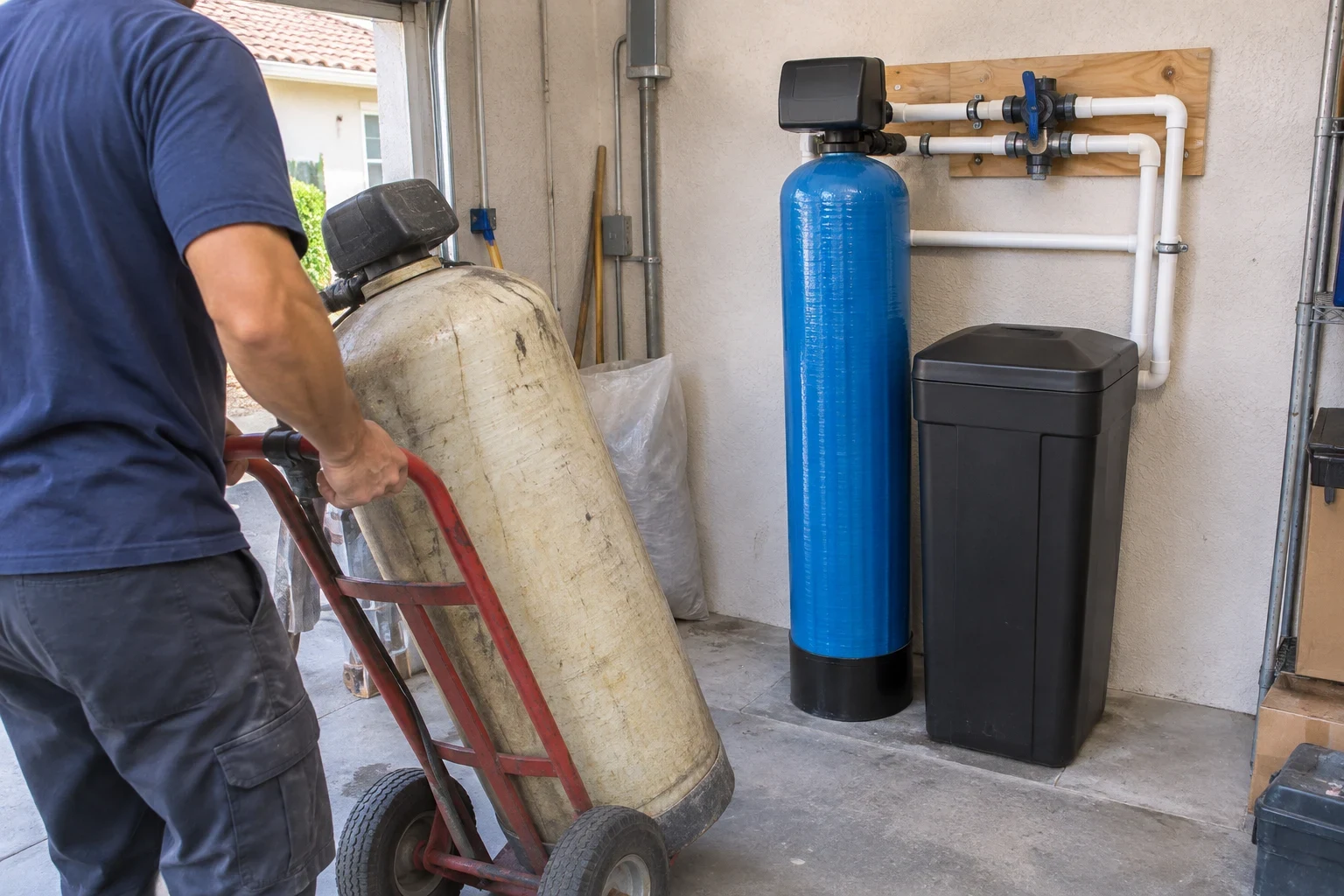
Careful removal of the old unit
We shut off the water, drain the old tanks and disconnect them without straining the pipes around them. Brine tanks can hold years of salt sludge, so we bag it and carry everything out. The old equipment leaves with us.
A close look at the connections
Before anything new goes in, we inspect the fittings, valves and pipe where the old system tied in. Corroded unions, galvanized nipples and brittle supply lines are common in older homes, and we point them out with photos before replacing them.
A proper bypass and shutoffs
Every system we install gets a working bypass so you can keep water flowing during service. If yours is missing or seized, we fit a new one.
Correct drain and air gap
The regeneration or backwash drain is routed to a suitable drain with an air gap, which keeps wastewater from being drawn back toward your supply.
Sizing for how you live now
Household size changes, and so does water use. We size the new softener or filter for your current household and plumbing, not simply to match the old label.
Startup, settings and a walkthrough
We fill, flush and program the unit, then check for leaks under full pressure. Before we leave, we walk you through topping up the brine tank, switching the bypass on and off, and what the display is telling you.
Signs your system is due for replacement
- Hard water is back
- Spots on glass, crusty faucet aerators and soap that will not lather can mean the resin bed has worn out. If a recent cleaning or repair did not help, the media is likely finished.
- Resin beads in the lines
- Small amber beads in a faucet screen or toilet tank usually point to a failed internal screen or distributor. On older units that repair often costs close to a new system.
- An outdated or failing control head
- Mechanical timers that drift, displays that go blank and valves no longer supported by their maker are a common reason to replace rather than chase parts.
- Cracks, rust or seepage
- A sweating or cracked tank, rusted fittings or water collecting at the base of the unit should not wait. A slow leak in a garage or utility closet can damage what is around it.
- Your water use has changed
- A system bought for two people can struggle with a family of five. Frequent regeneration and soft water running out by evening are both signs of an undersized unit.
How replacement day goes
- 1
A conversation by phone
You tell us what you have, how old it is and what you are noticing. We ask about your household and the plumbing so we arrive with the right equipment and fittings.
- 2
Look before we work
On arrival we lay down protection, inspect the old system and the pipes around it, and explain anything we find that needs attention before we start.
- 3
Swap and correct
We remove the old unit, fix or replace the connections that need it and set the new system level on a stable base. Water is usually off for only part of the visit.
- 4
Flush, check and clean up
We bring the system online, flush it, confirm the settings and check every joint for leaks. The work area is wiped down and the old equipment is hauled away.
What shapes the cost of a replacement
Two replacements that look alike on paper can differ once we see what is behind the old unit. We explain each part of the price before work begins, so the figure you agree to is the figure you pay. Here is what moves it.
- Type and capacity of system
- A larger softener, a combined softener and filter, or a specialty media system costs more than a basic single-tank unit. Sizing for your actual use matters more than buying the biggest tank.
- Condition of the existing plumbing
- Clean, modern connections keep the job simple. Corroded fittings, old galvanized pipe or a missing bypass add parts and time.
- Drain and power access
- If there is no proper drain or outlet near the install spot, we need to run one. A garage install with open walls is easier than a tight interior closet.
- Removal of the old equipment
- Heavy tanks full of resin, media or old salt take more effort to drain and carry out, especially from cramped spaces.
Questions about replacing your system
- Do I have to replace it with the same kind of system?
- No. Replacement is a good time to ask whether the old setup still fits. Some homes are better served by whole-home filtration, chlorine and chloramine removal, or a reverse osmosis unit at the kitchen sink alongside a softener. We will explain the options and leave the choice with you.
- Can you replace a system another company installed?
- Yes. We often take out units put in by others, including ones that were added to bit by bit over the years. When you call, it helps to tell us roughly how old it is and what repairs it has had.
- How long will I be without water?
- Usually only part of the visit. We use the bypass where it works, and if it does not, we keep the shutoff time as short as the plumbing allows and let you know before we turn anything off.
- What if you find a problem with my pipes?
- We stop and show you, with photos if it is hidden behind the unit. We explain what we recommend and what it adds before doing any extra work, so there are no surprises on the final bill.
- Will you help after the new system is in?
- Yes. Ongoing customer support for maintenance, filter replacements, and service needs is part of how we work. When the salt runs low, a cartridge comes due or a setting needs adjusting after a change in your household, one phone call to us covers it.
Ready to retire the old unit
Tell us what you have now and what it is doing. We will talk through whether replacement makes sense for your home and what the job would involve.