ServicesWater Softeners
Water Softeners in Lakeland
We size and install water softeners that stop scale before it reaches your fixtures, glassware and water heater. Before anything is fitted, we look closely at the plumbing it will join, because older pipes and past repairs decide how the install should be done.
What a softener does, and when it is the right choice
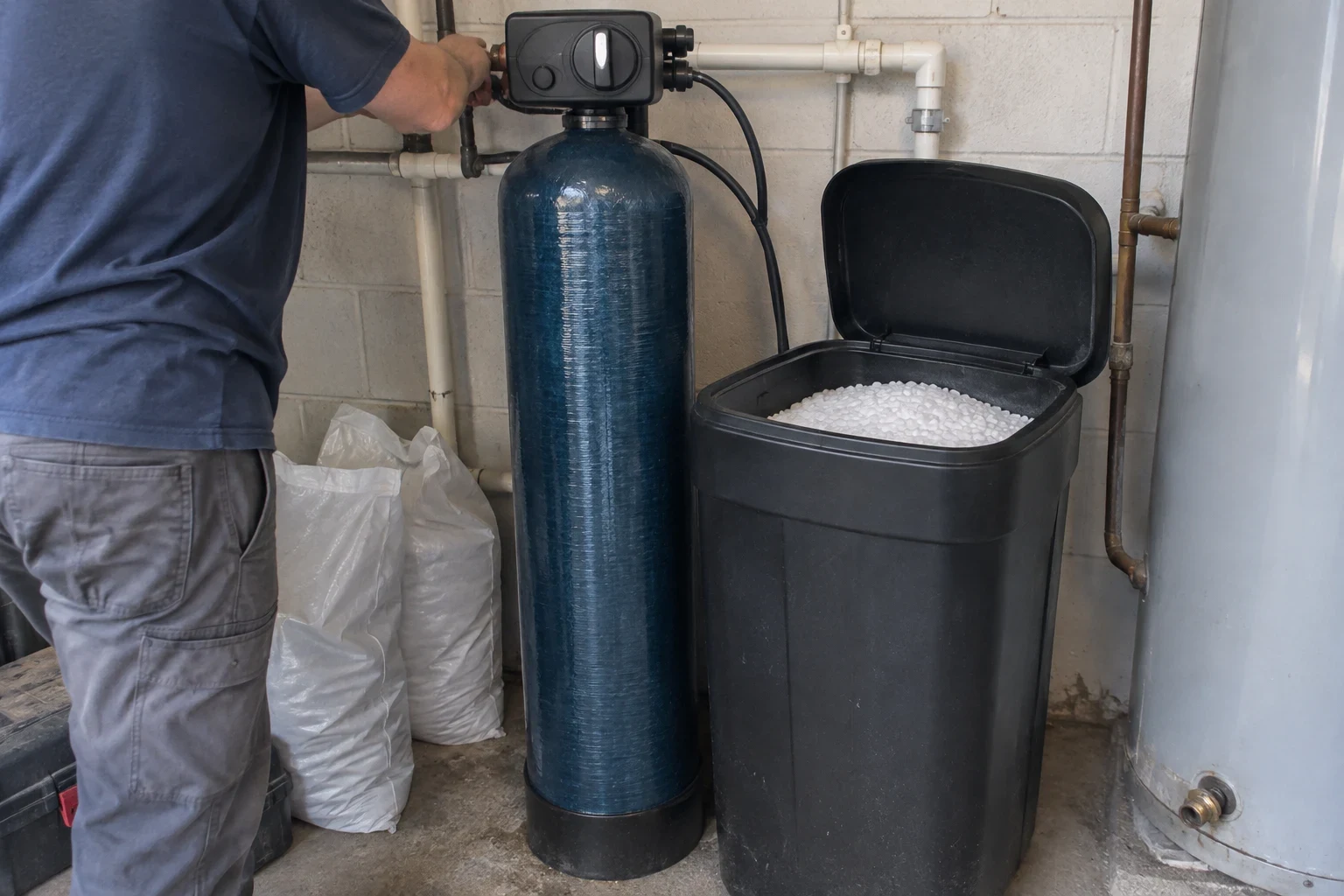
A water softener removes the calcium and magnesium that leave chalky scale in pipes, on shower glass and inside your water heater. Inside the tank, a bed of resin beads trades those minerals for sodium or potassium. On a set schedule the system rinses itself clean with brine drawn from a separate salt tank, then goes back to work.
In an older house, the softener is rarely the difficult part. The real work is the plumbing it connects to: galvanized lines patched over the years with copper or CPVC, a main shutoff that no longer closes fully, a water heater already holding sediment. We look at all of it before we recommend a size or a location, so the system suits the house you have, not a diagram.
A softener is worth it when hardness is the problem. If what bothers you is taste or a pool-like smell, Whole-Home Filtration or Chlorine & Chloramine Removal may serve you better. We will tell you that plainly.
What the installation includes
- Sizing for your household
- We set capacity by the number of people in your home, your fixtures and the hardness of your water, using your utility's published water quality report or a recent result you already have. Too small a unit rinses itself constantly and burns through salt. Too large, and the resin can sit unused for long stretches.
- A bypass valve at the tank
- Every system gets a bypass. You can take the softener offline for service or to water the lawn without shutting off water to the whole house.
- Careful tie-ins to older pipe
- Where galvanized steel meets copper, we use dielectric fittings to slow corrosion at the joint. If the pipe at the connection point is badly corroded, we replace that short section rather than clamp new parts onto a weak one.
- A drain line with a physical gap
- Each regeneration sends rinse water out of the tank. We run that line to an approved drain and leave open air between the hose and the drain opening, which keeps used brine from ever being pulled back toward your household water.
- Setup, walkthrough and cleanup
- We program the regeneration cycle, load the first bags of salt and show you how to check the salt level and work the bypass. Packaging, cut pipe and debris leave with us.
When hard water is showing up around the house
Chalky rings on fixtures
A gritty white buildup on aerators, showerheads and spray nozzles is mineral scale. Clean it off and it returns within a few weeks.
Spotted glassware and cloudy shower doors
Spots that survive the dishwasher, and a haze on glass that scrubbing will not lift, usually trace back to calcium in the water.
Crackling or knocking from the water heater
Minerals drop out of hot water and form a layer on the tank floor. Water caught beneath that layer boils in small bursts, which is the noise you hear. Left alone, the buildup makes the heater work harder and wears it out sooner.
Soap that will not lather
Hard water fights soap. You use more shampoo and detergent, laundry comes out stiff, and skin can feel tight after a shower.
An old softener that has stopped keeping up
If you already have a unit and the spots are back, it may be worn out or set up wrong. Our Water Softener Repair & Maintenance and Water Softener & Filtration System Replacement pages explain both paths.
What affects the cost of a softener
The equipment is only one part of the price. In an older house, the state of the pipe where the softener connects can matter just as much as the unit. Every line on our estimate comes with a plain explanation, so you know what you are paying for.
Capacity and valve type
More people and harder water call for more resin. A demand-initiated valve, which tracks the gallons you actually use before it rinses, is pricier at the start than a basic clock timer. Over the years it repays some of that by going through less salt and water.
Condition of the pipe at the tie-in
Clean copper or PEX connects quickly. Rusted galvanized line, a patchwork of old repairs or a shutoff that will not seal can add parts and labor.
Location and drain access
A garage with a drain and an outlet close by is the easiest spot. Running a new drain line or extending pipe to reach a better location adds time.
Salt or potassium
Salt is the common choice and the cheaper one to keep up. Potassium chloride also works, with a higher running cost, if you would rather limit added sodium.
How a softener installation runs
- 1
A conversation by phone
You tell us what you are seeing, how many people live in your home and whether there is an existing system. We ask about the age of the house and any plumbing work you know of.
- 2
A look at your plumbing
At your home we find where the main line enters, check the shutoff, note the pipe materials and look for a drain and an outlet near the install spot. This is where past repairs and outdated parts usually show up.
- 3
An estimate you can read line by line
We put it in writing: the softener, the plumbing labor and any problem we spotted that should be fixed first, each priced separately. Nothing is added on the day without your say.
- 4
Installation day
We protect the floor, shut off the water, make the tie-ins and test every joint under pressure. Most homes are without water for only part of the visit, and we tell you when that window starts.
- 5
Help once it is running
The relationship does not end when we pack up. Ongoing customer support for maintenance, filter replacements, and service needs means you can reach us when the salt gets low or a setting needs adjusting.
Water softener questions
Is softened water safe to drink?
Yes. As the resin pulls hardness out, it adds a small amount of sodium to the water. If you are limiting sodium, the brine tank can be filled with potassium chloride instead of salt. You could also add a Reverse Osmosis unit at the kitchen sink, which removes most of that sodium from your drinking and cooking water.
Will a softener damage my old galvanized pipes?
No. Softened water itself is not hard on galvanized pipe. The weak point in an older house is the joint we cut into, since corroded steel can crack once it is moved. We check that stretch of pipe before we start and replace it if it is not sound.
Does a softener also remove chlorine or improve taste?
Not by itself. A softener is built to deal with hardness minerals. If taste or odor is the complaint, we add a carbon stage through Whole-Home Filtration or Chlorine & Chloramine Removal, and we will say so if one system alone covers what you need.
How much room does a softener need?
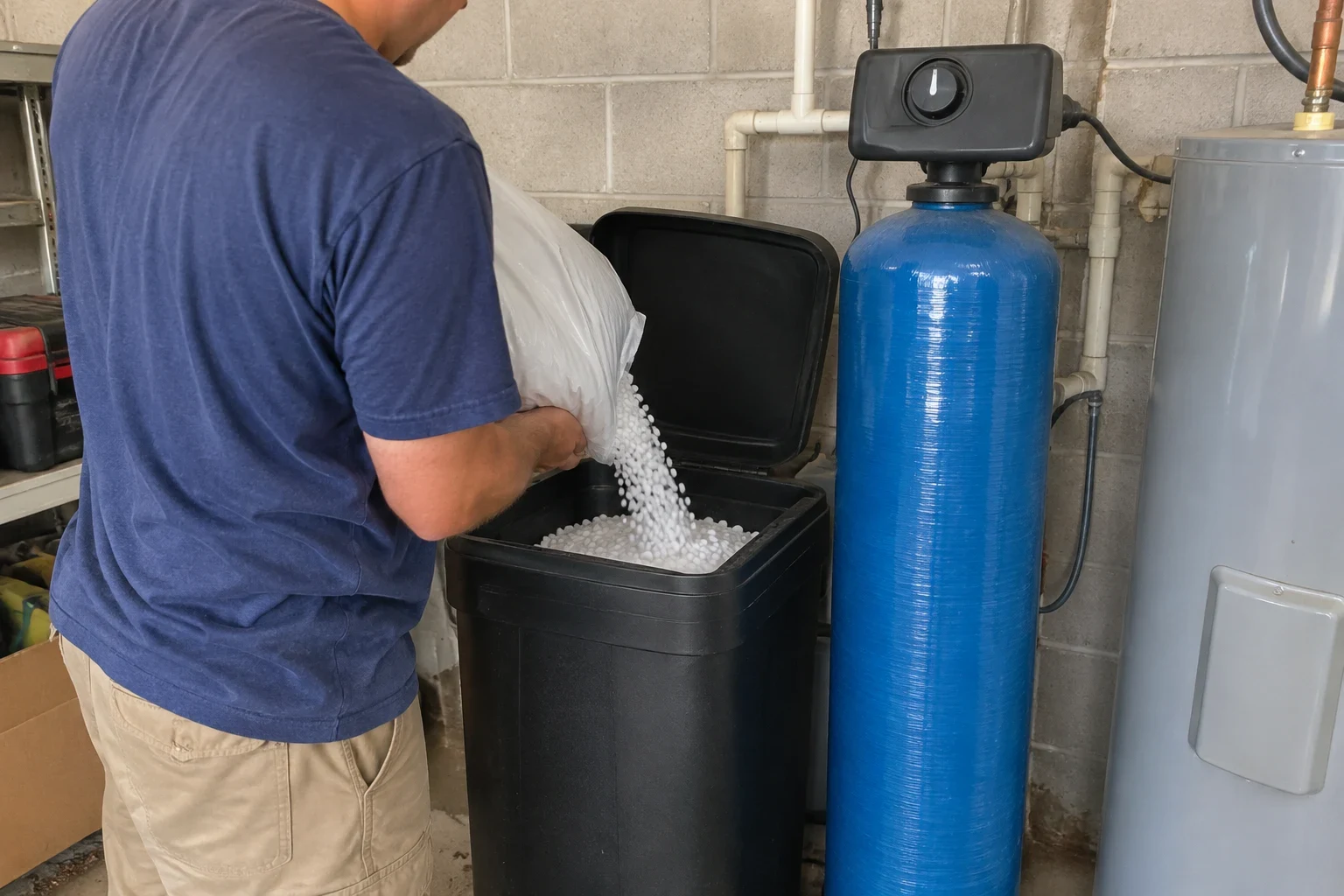
Expect it to take up about as much floor as a small closet, plus clearance to lift a bag of salt into the brine tank. It also needs a drain and an electrical outlet nearby, and we confirm both during the visit.
How often will I add salt?
Most households top up every month or two. The exact pace depends on your hardness, how much water you use and the size of the brine tank. A metered valve stretches the time between refills because it only regenerates when the resin is actually spent.
Find out if a softener fits your home
Describe the scale and spots you are dealing with, plus what you know about your plumbing. We will give you a straight answer on whether a softener makes sense and what installing one would take.