ServicesWell Water Treatment
Well Water Treatment in Lakeland
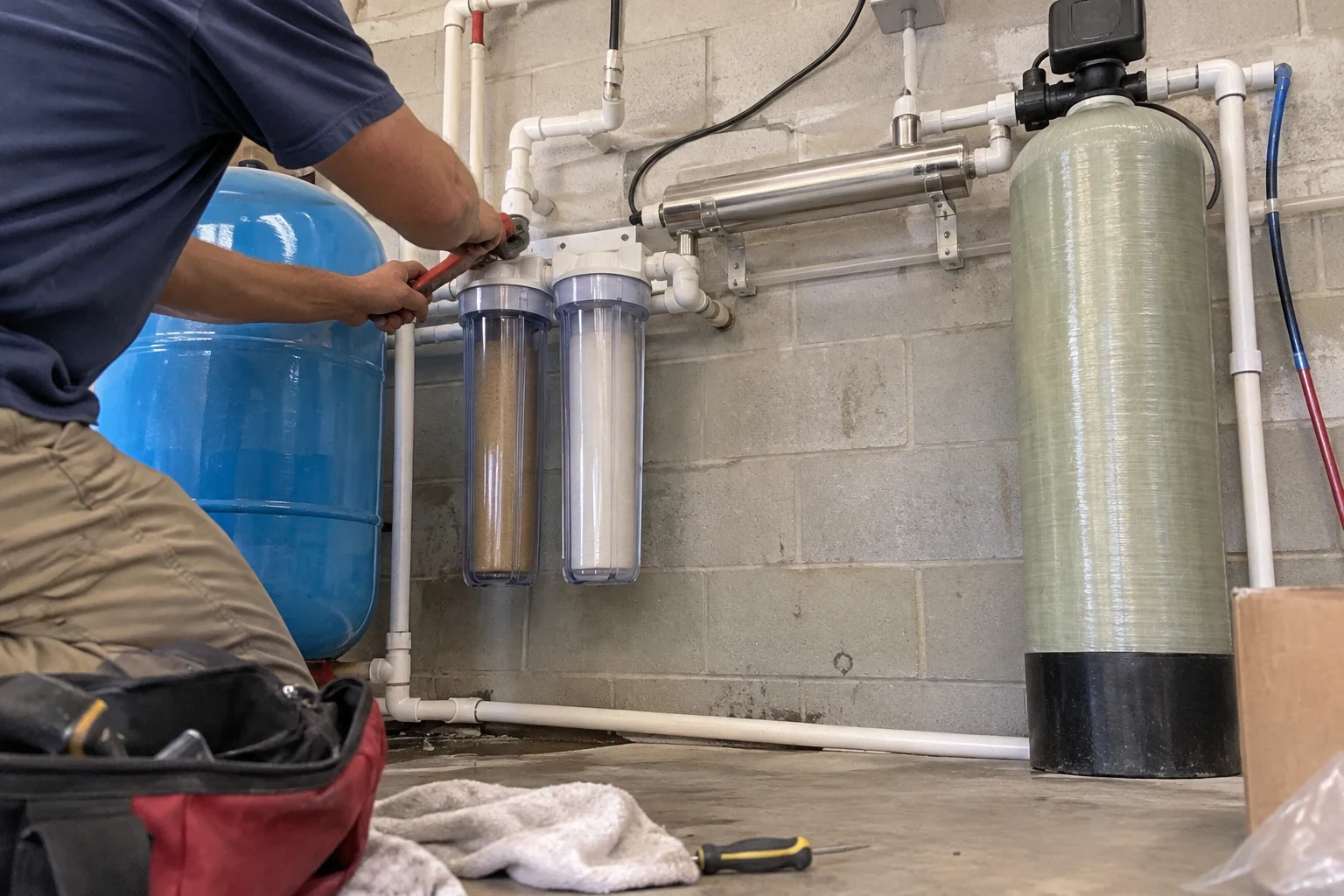
We install well water treatment that deals with what Florida wells tend to carry: sulfur smell, iron and manganese staining, sediment and hardness. Each system is matched to your pump, pressure tank and older plumbing, so the water improves without new problems downstream.
Treatment built around the well you actually have
A private well is a small water utility that you own. The water comes up through limestone and sand, and it often brings dissolved iron, hydrogen sulfide gas and minerals with it. None of that shows up the same way twice, so we size and configure each system for the water and the equipment in front of us.
Older properties add another layer. We regularly find pressure tanks past their prime, galvanized lines feeding rust into the water, and treatment units a previous owner installed and then stopped maintaining. Before we recommend anything, we look at all of it, because a new filter placed after a failing check valve or a corroded line will not perform the way it should.
The result is water that smells clean at the tap, stops marking your fixtures and laundry, and runs through equipment that is installed neatly, labeled and easy to service.
What a well treatment installation includes
- A look at your whole well system
- We check the pump controls, pressure tank, pressure switch settings and the visible plumbing from the wellhead to the house. This tells us what flow the system can deliver and where treatment should sit.
- Sediment prefiltration
- Sand and grit wear out valves and foul treatment media. A sediment stage up front protects everything after it and keeps aerators and appliance screens clear.
- Sulfur and iron removal
- For rotten-egg odor and orange or black staining, we typically use an oxidizing filter that converts dissolved sulfur and iron into particles the media can trap and backwash away. The setup depends on how strong the odor and staining are.
- Softening where the water calls for it
- Florida well water is often hard. If scale is part of your problem, we pair the iron and sulfur stage with one of our water softeners, placed in the right order so each unit does its own job.
- Bypass valve, drain and tidy plumbing
- Every system gets a bypass so water keeps flowing during service. We route the backwash line to a proper drain and finish the connections cleanly, with supports and labels.
- Removal of retired equipment
- If old tanks or abandoned filters are taking up space, we can disconnect and haul them away so you are left with one clear, working system.
Signs your well water needs treatment
Rotten-egg smell, worse with hot water
Hydrogen sulfide gas is common in Florida wells. It is often strongest at the shower or when the water heater has been sitting, and it can also react with a water heater's anode rod.
Orange, brown or black stains
Iron leaves rusty marks in toilets, tubs and on light-colored laundry. Manganese tends to leave darker gray or black streaks.
Grit in aerators and appliance screens
Sand or fine sediment clogging faucet aerators, the washing machine inlet or the ice maker usually means the water needs a prefilter before anything else.
White crust on fixtures and glass
Scale on showerheads and spotting on dishes point to hardness, which shortens the life of water heaters and fixtures.
An old system nobody maintains
If you bought a house with treatment equipment already in place and no idea how it works, it is likely overdue for attention. A neglected unit can make water worse, not better.
How the work goes, from first call to clean water
- 1
A conversation by phone
You tell us what you are noticing: smell, stains, pressure, any existing equipment. If you already have a water report, keep it handy and we will go over it.
- 2
A visit to see the well and plumbing
We look at the wellhead, pressure tank, piping material and the space where a system would go, including drain and power access. In an older house, this is where we catch the corroded fitting or tired tank that would undercut a new installation.
- 3
A written plan with each item listed
You get a clear proposal showing which stages we recommend, why, and what any plumbing corrections involve. If something does not need treating, we say so.
- 4
Installation day
We shut down the pump, lay down floor protection, install the system and set its backwash schedule. Water is usually off for part of the day, and we let you know the timing beforehand.
- 5
Startup and walkthrough
We flush the lines, confirm pressure and flow at the fixtures, and show you the bypass and the basics of upkeep before we pack up and clean the work area.
What moves the price of a well system
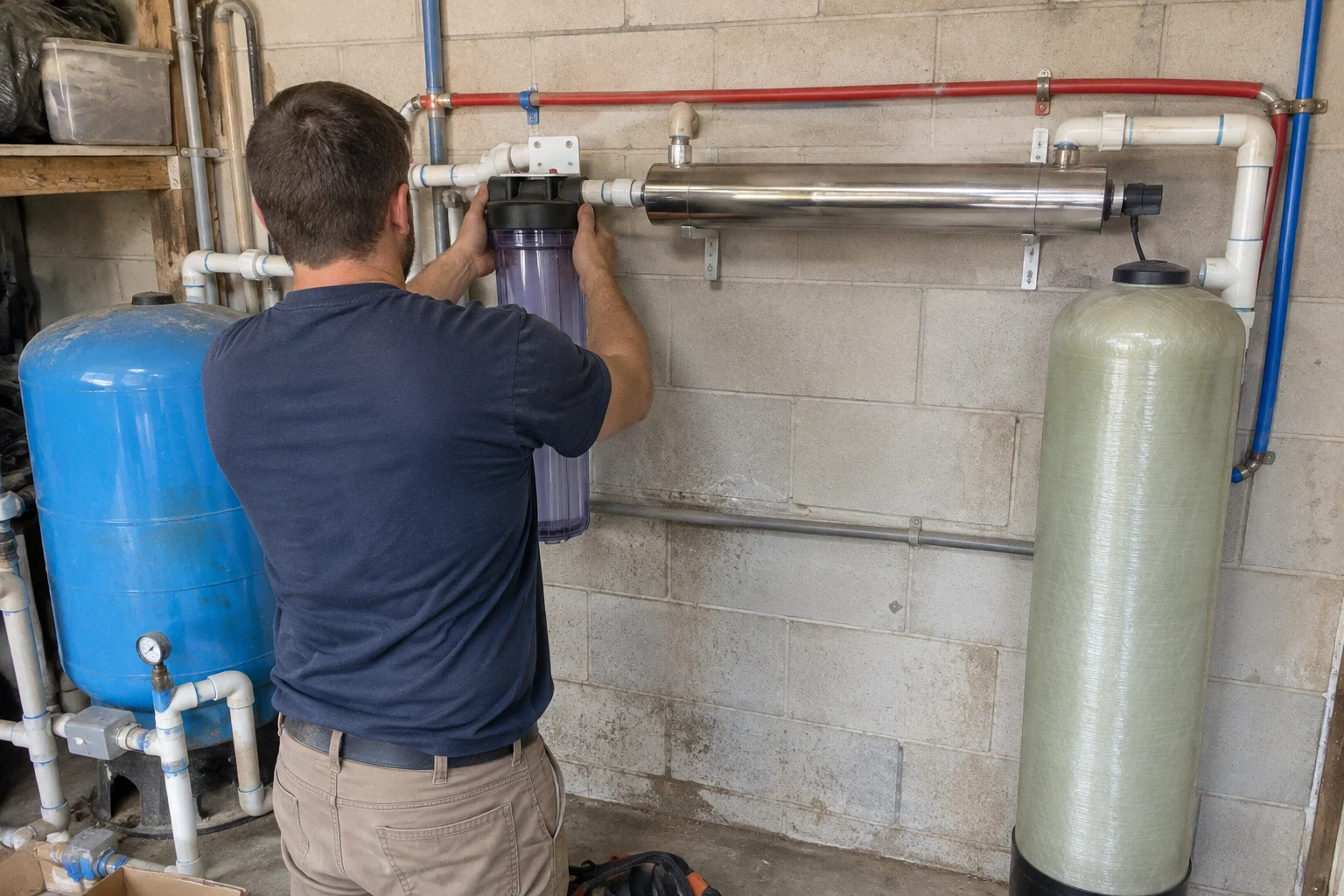
Each private well brings up its own blend of iron, sulfur, sediment and hardness, and the equipment already in your home has its own age and history. The price follows both of those. You see every line written out before any work starts.
- The number of issues to treat
- Odor on its own calls for less equipment than odor combined with iron staining and scale. Every stage we add brings its own tank, media and connecting plumbing.
- Your pump's flow and how many fixtures run at once
- The system has to match what your pump delivers and still keep up when a shower, the washer and a kitchen faucet are all open. Larger homes and stronger pumps need bigger tanks.
- The state of the pressure tank, pump and pipes
- In older houses we often find a tired pressure tank, a pump that cycles too often or galvanized pipe shedding rust. Some of that may need correcting first so the new equipment can do its job.
- Room for the system, plus drain and power
- Backwashing units need somewhere to send water, and many need an outlet nearby. When neither is close to the best spot, we run extra line to reach them.
- Clearing out older equipment
- Taking out a previous owner's softener, filters or tanks adds labor. Behind them we sometimes find worn fittings that are worth replacing while the water is off.
Well water treatment questions
Something not covered here? (863) 593-7401
Will my shower pressure drop after the system goes in?
When the equipment is sized to your pump, any change in pressure is slight and most people never notice it. A noticeable drop after treatment tends to come from one of two things: a tank chosen too small for the household, or a cartridge left in place long after it filled with sediment. We match the system to your pump's flow and check pressure at your fixtures before we finish.
The previous owner left a treatment unit in the garage. Is it worth saving?
It can be. We inspect the control valve, the condition of the media and the tank itself for cracks or channeling. If it is sound and suits your water, our water softener repair and maintenance work can put it back in service. If it is not, we explain what we found and give you a price on a replacement.
Should I add reverse osmosis for drinking water too?
Not necessarily. Well treatment takes care of odor, staining and hardness for every tap in your home. Some families like an under-sink reverse osmosis unit as an extra step for drinking and cooking water, and we will give you a straight answer on whether it is worth it in your case.
What upkeep should I plan for?
Sediment cartridges get swapped on a regular schedule, oxidizing filters backwash automatically, and a softener needs salt added. We provide ongoing customer support for maintenance, filter replacements, and service needs, so one call covers whatever is coming due.
Could the rotten-egg smell return later?
A system sized for the strength of your odor and kept up should hold it in check. If the smell drifts back, we look first at a cartridge that has reached the end of its life, media due for servicing, or the water heater's anode rod reacting with the water. Once we pin down which one it is, the fix is straightforward.
Ready for well water that smells and looks clean
Tell us what you are seeing at the tap and what equipment sits by your well. We will explain what we would look at during a visit and what happens next.