ServicesSoftener Repair & Maintenance
Water Softener Repair & Maintenance in Lakeland
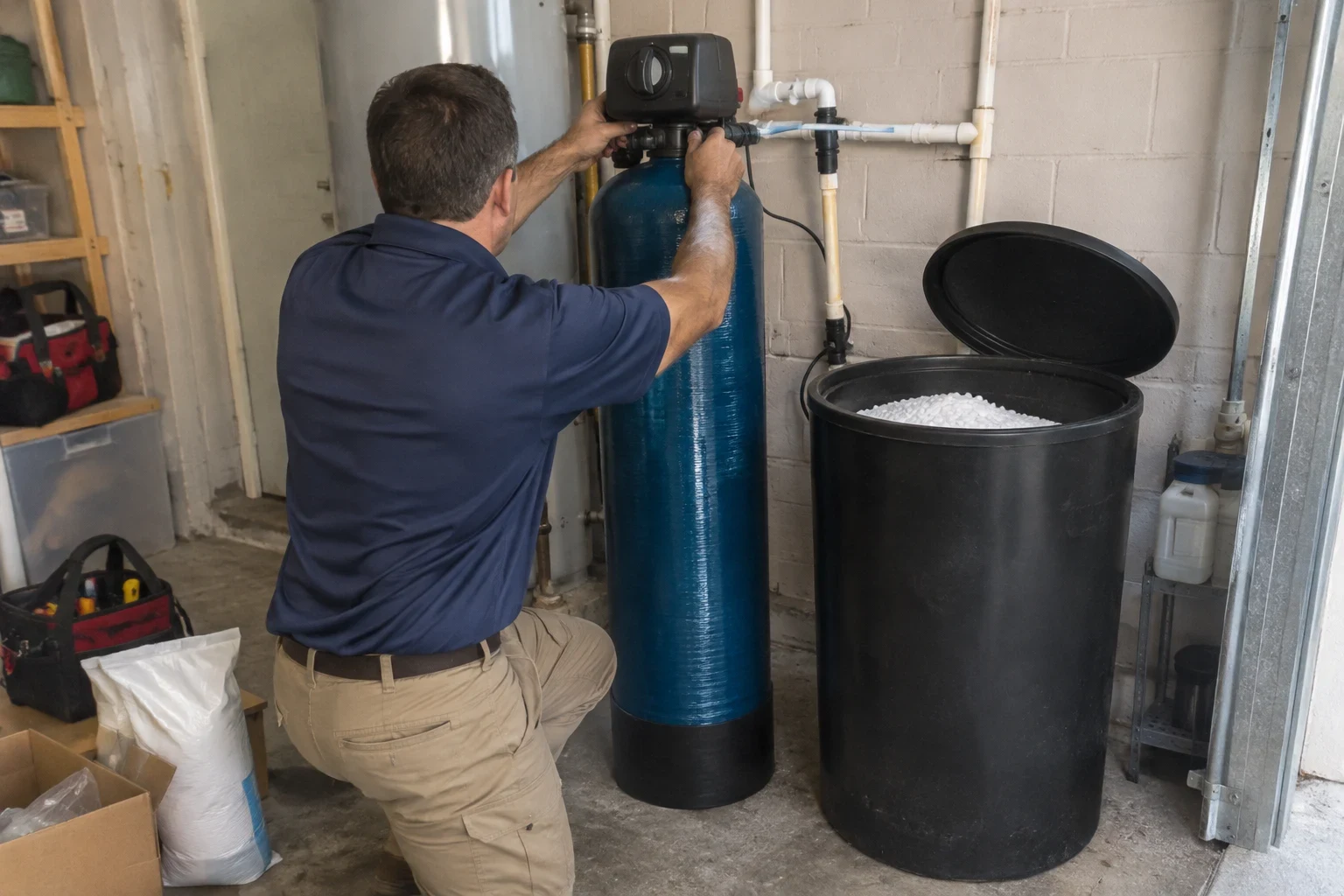
When spots return to the glassware or the brine tank stays full of salt, something inside the softener has changed. We find the cause, show you what we found and repair the unit carefully, including systems someone else installed years ago.
Getting a Tired Softener Working Properly Again
Inside every softener are a handful of components that wear with use: the control valve, the resin tank, the brine tank, the injector and the drain line. If one of them falters, the unit can carry on cycling and using salt while hard water runs past untreated. In most cases the answer is a cleaning, a new seal kit or a single part, not a whole new system.
Older houses bring their own complications. The softener may have arrived with the house, set up by a previous owner and adjusted by people you never met. We regularly come across a bypass valve that will not turn, a drain line missing a proper air gap, or a timer still programmed for a much larger household. So we look over the plumbing around the unit as well as the part that failed.
When repair is not the sensible choice, we tell you directly and explain our reasoning. Our Water Softener & Filtration System Replacement page covers what a new system involves.
What a Service Visit Covers
- Brine tank inspection
- We check for salt bridges, the hard crust that forms above the water and stops salt from dissolving. We also look for mushy salt sludge at the bottom and clean the tank when it needs it.
- Control valve and settings
- We confirm the valve cycles through each stage, then reset hardness, capacity and regeneration time to suit your household today.
- Injector and screen cleaning
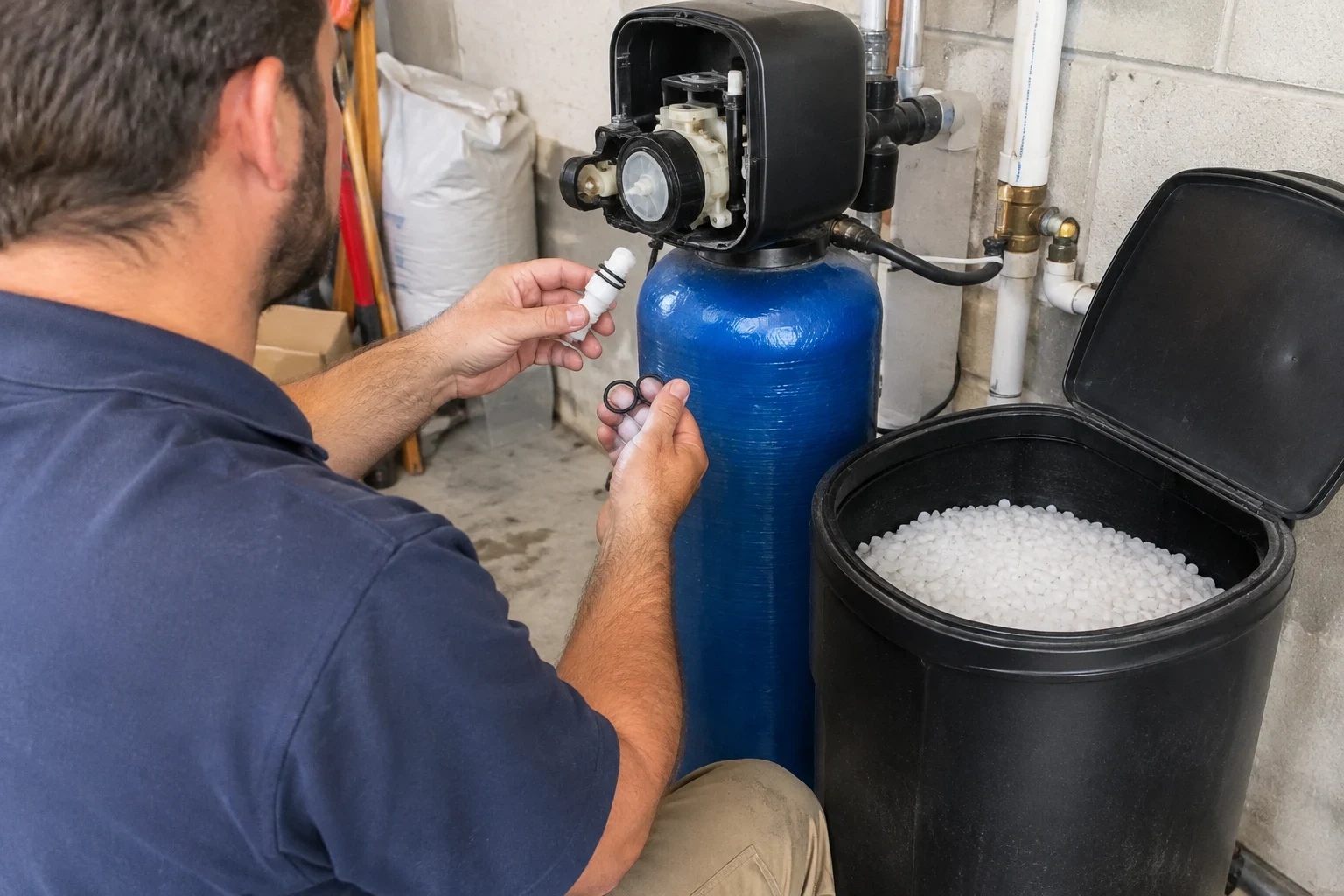
- A partly blocked injector stops the unit from drawing brine, which is one of the most common reasons a softener quietly stops softening. We take it apart, clean it and refit it.
- Seals, O-rings and spacers
- Worn seals let hard water slip past the resin. We replace them with parts matched to your valve.
- Resin condition
- Resin can foul with iron or break down with age. We tell you honestly whether a cleaning will help or whether the bed has reached the end of its life.
- Bypass, drain and connections
- We work the bypass, check the drain line and air gap, and look over the fittings for slow leaks that can damage a cabinet or floor.
Signs Your Softener Needs Attention
Salt level never drops
Salt that stays at the same height for weeks tells us the unit is not pulling brine. Most often a hardened salt bridge or a blocked injector is to blame.
Spots and scale are back
A white film on faucets, cloudy glassware and scratchy towels all mean hard water is slipping through.
Water standing in the brine tank
Some water in the tank is expected. A level that keeps rising suggests a float, valve or drain fault.
Low pressure since installation
A restricted valve, crushed resin or an undersized bypass can choke the flow to the rest of your home.
Unusual noise or constant cycling
A grinding motor or regeneration at odd hours usually comes down to a worn gear, a failing timer or settings someone changed along the way.
What Shapes the Cost of a Repair
Most softener repairs come down to which part failed and how easy it is to reach. We explain the cost before starting work, item by item. Here is what tends to move it.
The part involved
Cleaning an injector or breaking up a salt bridge is a small job. A new control valve or a full resin replacement is a larger one.
Age and make of the unit
Parts for current models are easy to source. Older or discontinued valves can take more time to match, and sometimes the honest answer is that replacement makes better sense.
Plumbing around the softener
Corroded fittings, an old galvanized connection or a missing bypass add work, and they are common in older houses.
Resin and tank condition
Iron-fouled or broken-down resin changes the job from a quick service to a rebuild of the media.
How a Repair Visit Runs
- 1
A conversation by phone
Tell us the brand if you know it, roughly how old the unit is and what has changed. With that, we can bring the parts most likely to be needed.
- 2
Diagnosis at the unit
We switch the softener to bypass, start a manual regeneration and watch it move through each stage. You see what we see, including photos of anything tucked inside the tanks.
- 3
A clear recommendation
We explain what failed, what the repair involves and whether it is worth doing on a unit of that age. No part is changed until you say yes.
- 4
Careful repair and cleanup
We cover the floor around the unit, complete the repair and refill the brine tank. Before leaving, we check every fitting for drips and set the controls back to suit your home.
- 5
Support afterward
Our ongoing customer support covers maintenance, filter replacements and service needs, so a later question about the softener has a place to land.
Softener Repair Questions
Can you work on a softener you did not install?
Yes. A good share of the units we see were left behind by a previous owner or put in by another company. We identify the valve and tank, source parts that fit, and tell you plainly if the system has aged past the point where repair makes sense.
How often should a softener be serviced?
Once a year works for most households. That visit looks at the brine tank, injector, seals and settings, which is where small problems usually begin. If your water carries iron, the resin may need attention more often.
Should I fix an older softener or replace it?
Repair usually pays when the tanks are in good shape and the trouble is a worn seal or a single valve part. When the resin is exhausted, the valve is no longer made and the tank itself shows wear, spending more on it rarely makes sense. We lay out both paths and the choice stays with you.
What kind of salt should I use?
Clean pellet or crystal salt made for softeners suits most units. Rock salt carries more insoluble material that settles as sludge in the brine tank. Keep the tank from being packed to the top, since a full tank is more likely to bridge in humid weather.
Will my water be off during the repair?
Usually only for short stretches. We set the softener to bypass so your home keeps running water, just unsoftened, while we work. If the bypass valve is seized, we tell you before starting and plan the shutoff with you.
Let's Get Your Softener Back to Work
Tell us what you are seeing and we will arrange a visit to look at the unit and the plumbing around it. We serve Lakeland and nearby towns including Lakeland Highlands, Highland City and Winter Haven.