ServicesReverse Osmosis
Reverse Osmosis Systems in Lakeland
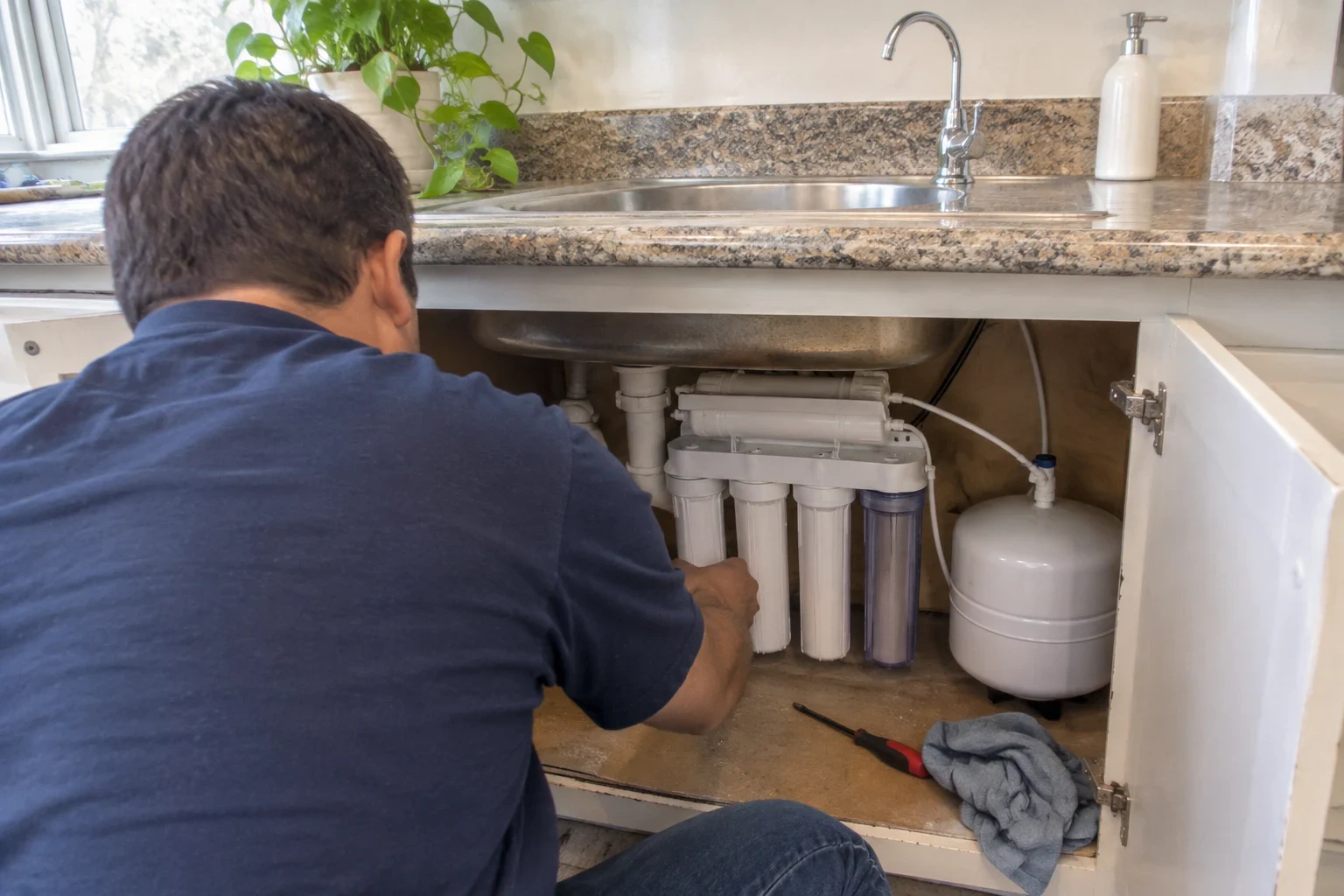
Our under-sink reverse osmosis systems deliver drinking and cooking water from a dedicated faucet beside your main tap. Where a house still has original plumbing, we check the shutoff valve, drain line and cabinet floor before anything goes in, so the system sits on sound connections and stays dry.
Clean water at the tap you drink from
A reverse osmosis membrane lets water molecules pass while turning away most dissolved minerals, many metals including lead, and much of what gives tap water an off taste. Carbon stages on either side of the membrane take out chlorine and round off the flavor. You get water for drinking, coffee, ice and cooking from its own small faucet at the kitchen sink.
It is the right call when your concern is what you drink rather than every gallon in the house. If you want less chlorine or softer water at every tap, our whole-home filtration and chlorine & chloramine removal services cover that work, and an RO system can sit alongside either one.
Houses built a few decades back add a layer. Lead solder was common in copper plumbing before the late 1980s, and worn faucets and fittings can shed metals into water that sits overnight. A system at the kitchen sink is a sensible, contained answer, as long as the plumbing it connects to is sound. That is where we start.
What an RO installation includes
A look under the sink first
Before anything is mounted, we check the cold-water shutoff, the supply line and the drain. Old multi-turn valves often seize or start to weep once they are moved. We would rather tell you before we touch one than after.
Membrane and filter stages
A sediment prefilter protects the membrane from grit and scale loosened from aging pipes. Carbon stages take out chlorine, which would otherwise wear the membrane, and a final carbon polish keeps the taste clean.
Careful tank placement
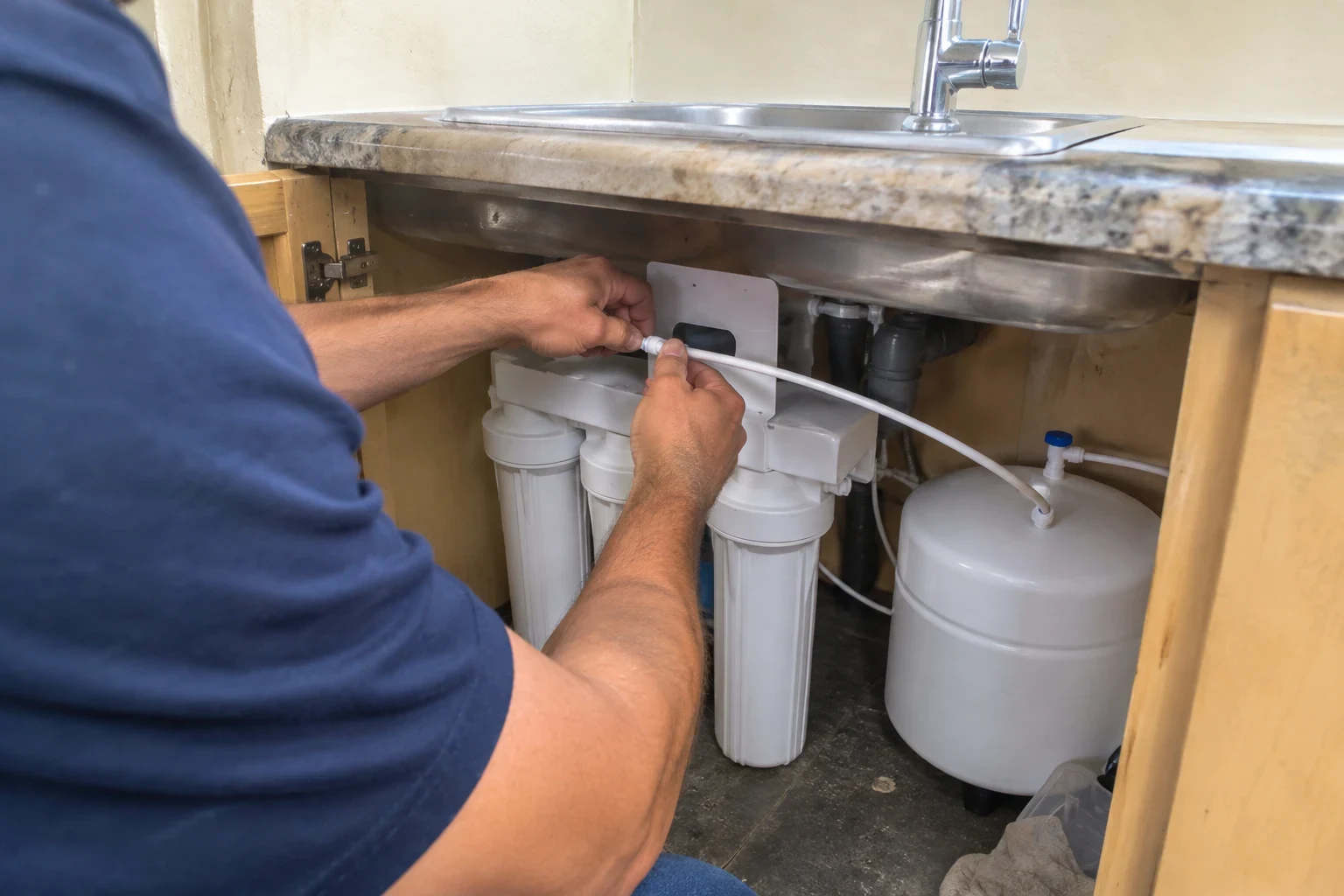
The pressurized storage tank sits in the sink cabinet or, where space is tight, in a nearby cabinet. We place it so it does not crowd the disposal or an old trap that may need attention later.
A faucet that suits your sink
We mount the drinking faucet in a spare sprayer or soap hole when one is free, or drill a clean hole through the sink or countertop. We talk through the finish with you so it sits well beside your main faucet.
A proper drain connection
RO systems send a small stream of concentrate to the drain. We fit the drain saddle above the trap, with an air gap where one is needed, so drain water cannot work its way back toward the system.
Final checks and a walkthrough
We run water through the new stages to clear them, then go over every joint with the system pressurized. You see where the shutoff is and which cartridge sits in which housing. Our ongoing customer support for maintenance, filter replacements, and service needs means you are not left guessing later.
Signs an RO system makes sense for your home
- Your house has its original plumbing
- Copper with aged solder joints, galvanized sections or decades-old faucets can add metals to the water you drink, most of all first thing in the morning.
- Bottled water has become a habit
- If you carry cases home every week for drinking and cooking, a system under the sink replaces the trips and the plastic with water on tap.
- Coffee, tea and ice taste off
- A flat or chemical edge in hot drinks, or cloudy ice cubes, often traces back to chlorine and dissolved minerals in the supply.
- White spots on glasses and kettles
- Mineral spotting points to dissolved solids. RO removes most of them from your drinking water. If scale also shows up in showers and appliances, a water softener may be the better fit for the rest of the house.
- A previous owner's RO unit is still there
- Sellers sometimes leave a system with filters nobody has changed in years. A neglected membrane can do more harm than good, and we can replace it with a system you know the history of.
How the install day runs
- 1
A conversation by phone
You tell us about your home, the kitchen sink and what you want from the water. We ask about the age of the plumbing and anything you already know about past repairs, then set a time that suits you.
- 2
Inspect and protect
We lay a mat in the cabinet and cover the floor, clear the space with you, and look over the valve, supply line and drain. If something needs replacing first, we explain why and what it adds before doing it.
- 3
Mount and connect
The filter assembly and tank go in, the feed joins the cold line, the drain saddle goes on and the faucet is set. We keep the rest of the kitchen usable while we work.
- 4
Rinse, watch and tidy
Fresh cartridges and a new membrane have to be rinsed through before you drink from them. We watch every connection for drips, let the tank fill completely once, and carry away packaging and old parts so the cabinet is left neat.
What shapes the price of an RO system
We give you a clear, line-item price before any work starts. The figure depends mostly on the system you choose and on the state of the plumbing it joins. Older homes sometimes need a valve or supply line replaced, and we tell you about that up front rather than partway through.
- The system itself
- The number of stages, membrane capacity, and extras such as a remineralization stage or a tankless design all change the cost.
- Water pressure
- Membranes need steady pressure to work well. Where pressure is low, a small booster pump may be needed, which adds parts and calls for an outlet nearby.
- Condition of existing plumbing
- A seized shutoff, corroded supply line or tired drain trap is better replaced now than patched later. Each is priced separately so you can see exactly what it covers.
- Faucet and countertop
- Mounting the faucet in a hole you already have is the simplest route. Cutting through granite or quartz calls for a diamond bit and extra time, and a specialty finish such as brushed nickel or matte black costs more than standard chrome.
- Where the water goes
- A tank in the sink cabinet is straightforward. Running a line to a refrigerator ice maker or a second cabinet adds tubing and labor.
Reverse osmosis questions
- Does reverse osmosis waste a lot of water?
- Every RO system routes a portion of incoming water to the drain while the tank fills. That flow carries off what the membrane rejects and keeps it clear. How much depends on the design and your water pressure, and current systems are more efficient than the units of years past. We explain the options and how much each one sends down the drain.
- Will it remove lead from my old pipes?
- RO membranes are among the more effective household options for reducing lead, which is why they suit older homes so well. Keep in mind that it treats only the water at the RO faucet. Water from the other taps in the house is unchanged.
- How often do the filters need changing?
- Prefilters and carbon stages are usually changed about once a year, sometimes sooner when aging pipes shed sediment. Membranes last longer, often a few years. We help with replacements as part of our ongoing support, so you always know what goes where.
- Can it supply my refrigerator ice maker?
- Yes, in most kitchens. We run a line from the system to the ice maker and water dispenser, which makes clearer, better-tasting ice. The route depends on the cabinets and flooring between the sink and the fridge.
- Does RO water taste flat?
- Very pure water can taste a little different to some people. An optional final cartridge returns a trace of calcium and magnesium to the water just before it reaches the faucet, which softens that flatness into a fuller taste. We can include it when the system goes in or fit it on a later visit.
Talk through your kitchen sink with us
Tell us about your home and what sits under the sink, and we will suggest a system that fits it. You get a clear price before any work begins.