ServicesWhole-Home Filtration
Whole-Home Filtration in Lakeland
We install whole-home filtration at the point where water enters your house, so the shower, the kitchen tap and the laundry all draw from filtered water. In older homes we look closely at the pipes and valves first, then fit a system that suits them.
One system at the main line, filtered water everywhere after it
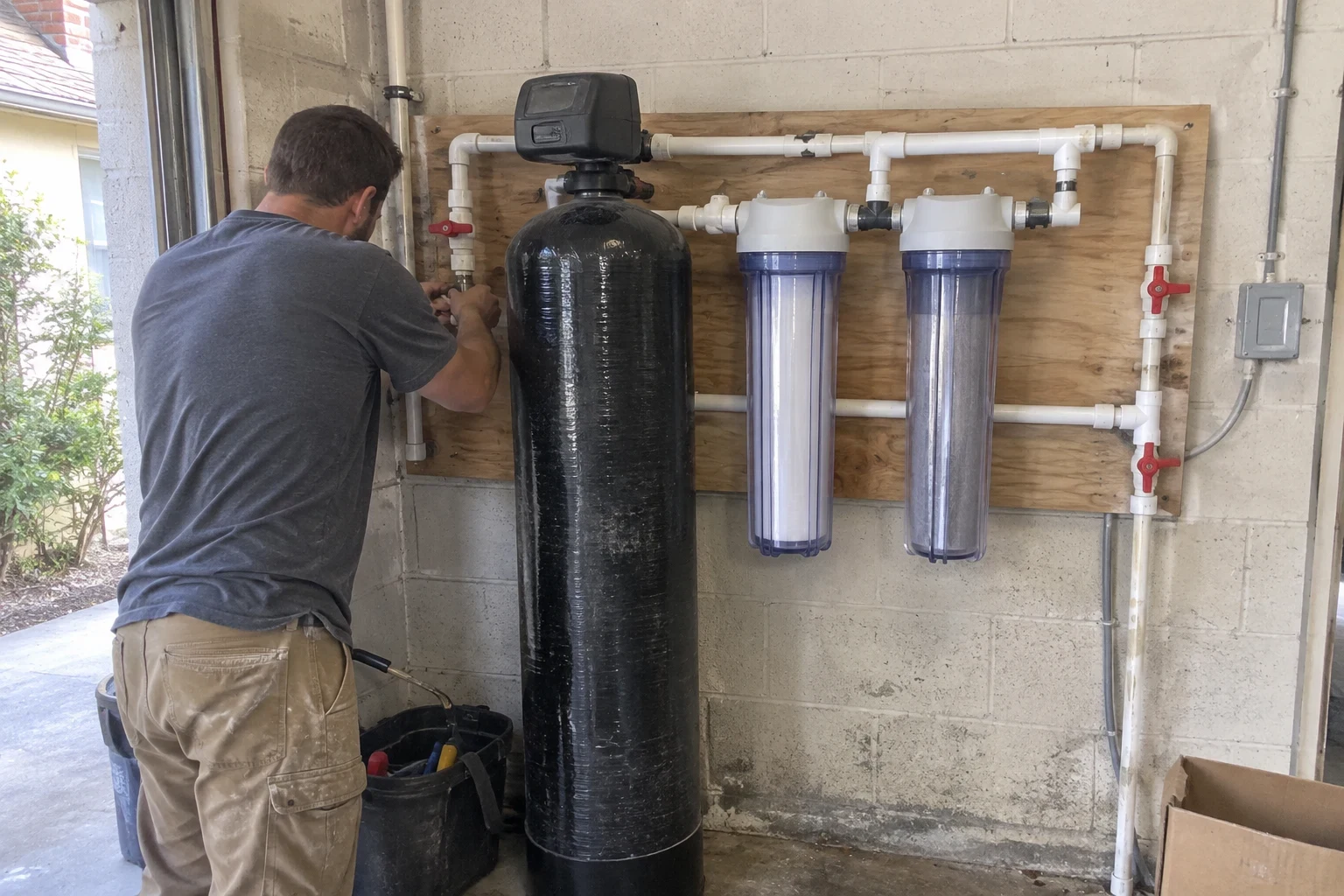
A whole-home system is a sediment prefilter and a tank of carbon media set on your main water line. Utilities add a disinfectant to keep the supply safe on its way through the pipes, and the faint pool note you notice at the tap or in the shower comes from that treatment. Carbon reduces it, along with fine grit, before the water branches off to your fixtures.
Older houses add a few wrinkles. The main line may be galvanized steel, early copper or polybutylene, and the shutoff valve beside it has often been sitting untouched for decades. Earlier owners may have patched the line with mismatched fittings. We plan around what is really there, not what a catalog assumes.
We will also tell you plainly what this system does not do. It filters water as it enters the house, so it cannot clean up rust shed by corroded pipes further down the line. If your concern is drinking water specifically, reverse osmosis at the kitchen sink may serve you better, and we will say so.
What the installation includes
- Sediment prefilter
- A cartridge ahead of the carbon tank catches sand and scale flakes. It protects the media and keeps the main tank working longer between service visits.
- Carbon treatment tank
- The main vessel holds activated carbon sized to your household's flow. If your water is treated with chloramine rather than chlorine, we specify catalytic carbon, which handles it far better.
- Bypass and isolation valves
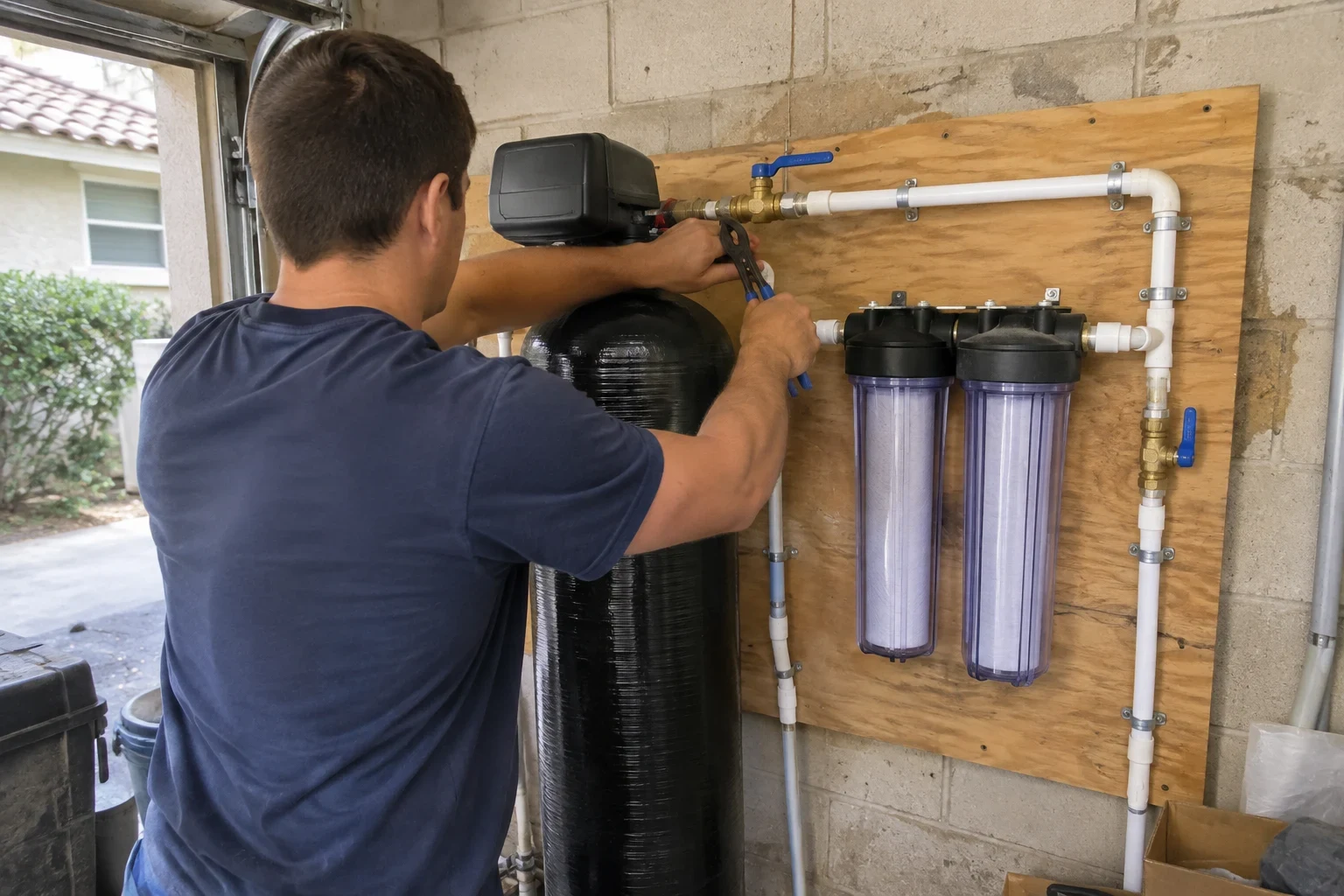
- We fit a bypass so water keeps flowing to the house while the system is serviced. Where the old main shutoff is seized or weeping, we point it out and can replace it during the same visit.
- Careful tie-in to existing pipe
- We use transition fittings matched to your pipe material, so new connections do not create a weak spot against old galvanized or polybutylene line.
- Placement and protection
- Most Florida homes have the main line on an exterior wall or in the garage. Outdoor systems get a cover or enclosure to keep sun off the housings, which helps them last.
- Startup, flush and cleanup
- We flush the new media until the water runs clear, check pressure at a fixture inside, and leave the work area as tidy as we found it.
Signs a whole-home system makes sense
A pool smell in the shower
If hot showers fill the bathroom with a chlorine odor, you are breathing what you would otherwise taste. Filtering at the main line addresses every shower at once.
Pitchers and fridge filters everywhere
Several small filters to change on different schedules usually mean the whole house wants the same thing. One system is simpler to look after.
Grit in aerators and shower heads
Fine sediment collecting in screens is a sign a prefilter would earn its place. Clogged aerators often show up after nearby main work.
Skin and hair that feel stripped
Some people find their skin feels tight and their hair looks flat after a shower. Lowering the chlorine in bath water often makes it feel softer, which is about comfort rather than health.
An old filter housing nobody services
Older homes often have a previous owner's cartridge housing on the line, sometimes cracked or long past its last change. That is a good time to fit something sized for the house.
What shapes the price
Every system starts with the same parts, but the house decides much of the work around them. We price each job after seeing the main line, and the written estimate shows each item separately so nothing appears later.
Household size and flow
More bathrooms and a larger main line call for a bigger tank so pressure holds up when two showers run at once.
Type of carbon media
Standard carbon suits chlorine. Catalytic carbon for chloramine costs more and is worth it only when your water calls for it.
Pipe material and condition
Clean copper or CPVC is straightforward. Galvanized or polybutylene line may need extra transition fittings or a short section replaced so the new joints are sound.
Old valves and past repairs
A seized shutoff or an earlier patch at the tie-in point adds parts and time. We show you what we found and let you decide.
Location and enclosure
A garage install is simpler than a tight exterior wall that needs a pad and a cover.
From first call to filtered water
- 1
Start with a phone call
Describe what bothers you about the water, how many bathrooms the house has and roughly when it was built. From that we can outline which system is likely to suit and what we will want to see in person.
- 2
A look at your main line
We locate where water enters, note the pipe material and check the shutoff and the fittings around it. You then receive a written estimate with each part of the job listed on its own line.
- 3
Installation day
We close the main, cut in the system with its bypass, and replace any valve you have approved. In most houses the taps are off for a few hours rather than the whole day, and we give you the planned shutoff time ahead of our arrival.
- 4
Flush, check and walk-through
We flush the media, check pressure and look for leaks at every new joint. Before leaving we show you the bypass, the prefilter and the signs that service is coming due.
Questions about whole-home filtration
Will filtering the whole house leave my showers weak?
Not when the tank matches the house. A noticeable drop usually traces back to a vessel that is too small for the plumbing or a prefilter cartridge that has gone too long without a change. We choose the tank from your bathroom count and the size of your main line, then run a fixture indoors to confirm the flow before we pack up.
Does it remove lead from old pipes?
Not reliably. A whole-home filter treats water before it reaches your interior plumbing, so anything picked up from old pipes or fixtures afterward is untouched. For drinking and cooking water in an older house, a reverse osmosis system at the kitchen sink is the better answer.
Is this the same as a water softener?
No. Carbon filtration reduces chlorine taste, odor and sediment but does nothing for hardness minerals. If scale on fixtures is your main concern, our Water Softeners page explains that option, and the two can be installed together.
How often does it need service?
Plan on changing the sediment prefilter a few times a year, depending on your water and how many people live in the house. The carbon media lasts far longer before it needs replacing. After installation we stay involved: ongoing customer support for maintenance, filter replacements, and service needs is part of what we offer, and a phone call is all it takes when a change is due.
My water may be treated with chloramine. Does that change anything?
Yes. Ordinary carbon handles chloramine slowly, so we use catalytic carbon when it applies. Our Chlorine & Chloramine Removal page goes into more detail on the difference.
Ready to plan a system for your house
Tell us about your plumbing and what you notice at the tap. We will explain what fits your home and what the installation would involve.